Oct 18, 2026Buying Guides
Isuzu D-MAX Exterior Upgrade Guide: 2012-2019 vs 2020+ Generations
Both D-MAX generations share the road at once. Here is what to stock for 2012-2019 and 2020+ trucks — and how to split a wholesale order between them.
Most pickup platforms phase one generation out as the next arrives. The Isuzu D-MAX is the profitable exception: the 2012–2019 trucks and the 2020+ generation share the road at the same time, in volume, across almost every export market that matters. For wholesalers that makes the D-MAX a two-catalog platform — and the suppliers who treat it that way, stocking both generations side by side, are the ones whose D-MAX shelf never sits still. This guide maps what sells for each generation and how to split an order between them.
One Platform, Two Catalogs — and No Interchange
The generation line sits between the 2019 and 2020 model years, and it is a hard line. Front-end panels, lighting, flares are built generation-specific, and the mounting hardware behind them follows the same rule: a 2020+ part will not seat on a 2012–2019 truck, and the reverse fails just as completely. Owners' communities and specialist retailers treat the split the same way — filter by model year first, everything else second.
Inside the older generation there is one more wrinkle worth knowing: several products carry their own sub-ranges, like grilles listed for 2016–2018 and rain visors for 2012–2017. The year range printed on the listing is always the authority — model names compress too much history into too few characters.
The ordering consequence is worth stating plainly. A wholesale order placed for "the D-MAX" rather than for a specific generation strands stock on one side of the line: the 2012–2019 panels wait for trucks that have moved on, or the 2020+ styling pieces land in a market still driving the older fleet. Generation is not a detail of the D-MAX order — it is the first field on the order sheet.
What Moves for the 2012–2019 Trucks
In many export markets the older generation still makes up much of the fleet on the road, and its demand profile is refresh-and-maintain. These trucks have working lives behind them, and their owners spend on parts that undo years of sun and road time.
Fender flares lead the line — flexible PP sets for the 2012–2019 body are a consistent seller in markets where the D-MAX works as a farm and trade vehicle, and the material matters on a working truck: flexible PP absorbs knocks and flexes rather than cracking. Rain visors follow close behind: an injection-molded visor is a low-ticket, high-attach item that pairs naturally with any other order, and the listing carries its own sub-range down to the 2012–2017 trucks, so the year filter applies here too. Tail lights and grilles complete the refresh set — tired originals go yellow and dim, and a replacement set restores the whole rear and face of the truck at once. If your market's D-MAX fleet skews older, this is the side of the catalog that pays the rent.
What Moves for the 2020+ Generation
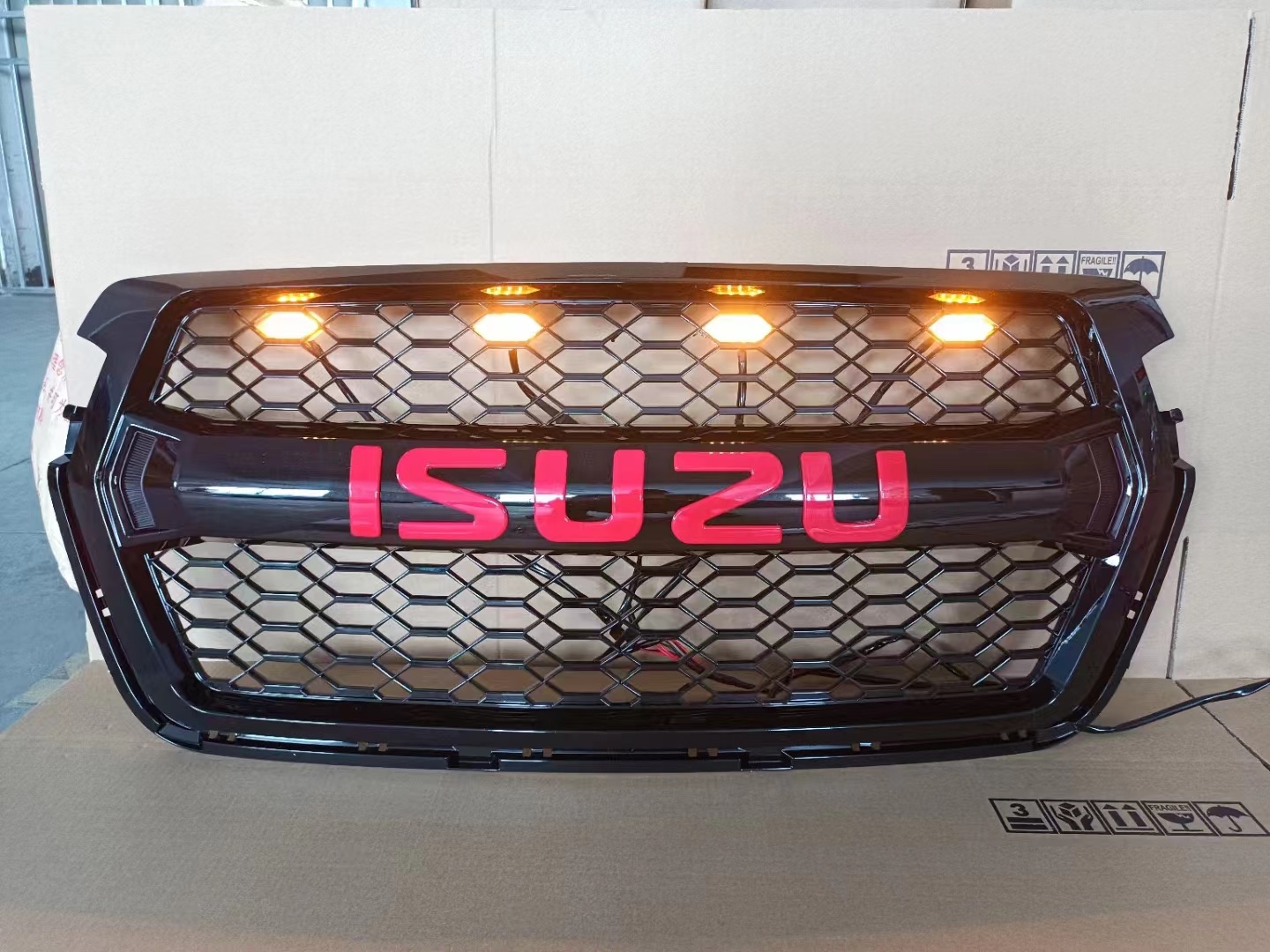
The newer trucks run a style-up profile instead. Owners of current-generation D-MAX trucks buy to differentiate, and the lines that answer are the more expressive ones: LED tail lights, sports grilles, rear bumpers, roll bars and bed accessories that turn a stock pickup into a personal one. Because these trucks are newer, the refresh-and-replace side of demand is lighter, and the styling lines carry the category.
Some lines on this side are made to order — worth confirming lead times per item rather than assuming stock depth.
Split the Order the Way the Market Splits It
Because both generations are stocked side by side, the practical question is ratio, not choice. Let the age profile of your market's D-MAX fleet decide it: markets where the 2012–2019 trucks dominate take a deeper refresh line — flares, visors, tail lights, replacement grilles; markets where the 2020+ models are already moving into the trade take a deeper styling line — LED lighting, sports grilles, rear bumpers, roll bars, bed accessories; most markets need both, which is exactly why the split exists as a split.
Availability supports the two-sided order: roughly 70% of the D-MAX range is in stock, and in-stock lines ship as single pieces for dropshipping trials or mixed with other models in one shipment — so the first order can cover both generations and both demand profiles without splitting freight. Made-to-order items typically run 2–4 weeks, confirmed by product and quantity before you commit. If you sell under your own brand, custom logo options are available from 60 pieces per item.
Confirm Fitment per Generation, in Writing
The one habit that protects every D-MAX order: send the truck list — model, year range and the part — and get fitment confirmation before you commit. It is the discipline we apply per generation before quoting, and it is one email on your side. Contact us to start a confirmation or request trade pricing for the full D-MAX range.
For the individual lines behind this guide, see our Isuzu D-MAX parts page, and read our guides to choosing grilles, choosing tail lights, and our fitment-first approach — the categories that carry both generations of this platform.