Oct 17, 2026Buying Guides
How to Choose Tail Lights for Ranger, Hilux and D-MAX: A Wholesale Buyer's Guide
A wholesale buyer's guide to LED tail lights: sequential, smoked and standard styles, generation fitment, plug-and-play harnesses, and ordering tips.
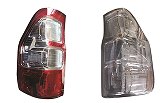
Tail lights are the part your customers' customers see last — every stop, every parking lot, every follow-home drive. That rear-facing position makes them a fast-repeat category in pickup exterior parts: they break in accidents, they fade in the sun, and a fresher, brighter pair changes the whole rear view of the truck. But for wholesalers the category has a specific trap: tail lights are a lighting product, and a set that looks right but shines dim next to stock comes straight back as a complaint. This guide covers how to choose them properly for your market.
Fitment Comes From the Listing, Not the Model Name
Tail lights change shape with every generation, and the platforms we supply cover a wide spread — from D-MAX 2012–2019 and 2020–2024 sets to Ford Ranger generations going back to the 2005–2010 trucks, alongside Hilux, Navara and Triton lines. That range is good for catalog depth, but it makes the year range on each listing the only reliable filter. A 2020–2024 D-MAX set will not seat on a 2016 truck, and the connectors will not match either.
Check the listing states the exact model years, and match it against the trucks your market actually runs. If your country is full of 2012–2015 D-MAXes, the newest sets matter less than the oldest ones — order against your installed base, not against the catalog's front page. A mix skewed to your best-selling years outsells an even spread, so let the age profile of your market set the ratio.
Pick From the Three Working Styles
Aftermarket tail lights for these platforms come in three working families, and each sells to a different customer:
Standard LED sets keep the factory shape and light pattern while moving the light source to LED. They serve repair-driven buyers and fleet customers, they are the easiest line for general parts stores to sell, and they answer the most common real-world problem: tired, faded original units that have gone yellow and dim.
Smoked sets carry a dark tinted lens for the stealth, uniform look — blacked-out grilles, smoked flares, dark rear ends. The trade-off every buyer should understand is optical: a smoked lens absorbs some of the light passing through it, so the look is aggressive but the output is softer. Markets with strong restyling culture buy smoked on sight; markets that treat the truck as a work tool lean standard. Many dealers carry both for exactly this reason — the look pulls one customer, the brightness reassures the other.
Sequential sets add the dynamic indicator — the sweeping turn signal that buyers know from modern flagship trucks. It is the feature that photographs well and sells in clips, and it turns an ordinary rear-end refresh into a visible upgrade. As a stocking rule, sequential sets are the upgrade line rather than the baseline: they sit above standard sets and reward markets where buyers are already spending on the rest of the truck. Sequential styles move hardest in social-media-driven restyling markets.
A balanced order carries standard sets across your top platforms plus one smoked or sequential line to test the styling demand. Our tail lights range covers 16+ designs across Ranger, Hilux, D-MAX, Navara and Triton, so the trial can stay narrow and still cover the trucks that matter in your market.
Ask the Lighting Questions, Not Just the Fitment Questions
Because tail lights are a lighting product, the quality questions are different from body panels. Ask every supplier the same three. First, are the sets LED with a stable, tested output — a cheap set that shines dimmer than the stock it replaces is a returns generator, not a product. Second, is the harness plug-and-play — our sets use a plug-and-play harness for most models, so the installation stays a connect-and-mount job rather than a wiring project, and your installer base sells the upgrade without hesitation. Third, is the lens material UV-stable and the housing sealed against dust and pressure washing, because a tail light fails in the eyes of the customer long before it fails electrically — first cloudy, then hazy, then returned.
Consistent answers across your supplier base make quotes comparable and keep the category's reputation intact on your shelf.
Order Against Your Installed Base
Availability first: roughly 70% of the tail light range is in stock, and in-stock sets ship as single pieces — practical for dropshipping trials — or mixed with other product lines in one shipment. Made-to-order items typically run 2–4 weeks, confirmed by product and quantity before you commit. Customization is available for buyers building their own range.
The Step That Protects the Sale
Before ordering, send your supplier the truck list — model, year range and the style — and get fitment confirmation in writing. It is the same one-email discipline we apply across every exterior category, and you can contact us to start it or request the trade catalog for the full tail light range.
For the rest of the rear of the truck and the platforms behind these sets, see our Ranger, Hilux and D-MAX parts pages, and read our guide to choosing grilles and our fitment-first approach — the rest of the order alongside tail lights.