Oct 15, 2026Buying Guides
Conversion Kits vs Body Kits: What to Stock for Each Pickup Platform
Body kits refresh newer trucks with bolt-on panels; conversion kits give older pickups a modern face. Here is how wholesale buyers split stock by platform.
Importers and parts wholesalers eventually face the same shelf-planning question: budget is finite, and the two big exterior lines — body kits and conversion kits — serve overlapping but different customers. Choose the mix well and each line feeds the other; choose badly and half your catalog sits still while your customers buy it elsewhere. Here is the distinction, and a practical rule for splitting stock by platform.
First, the Terminology
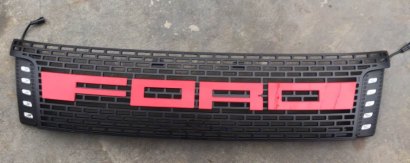
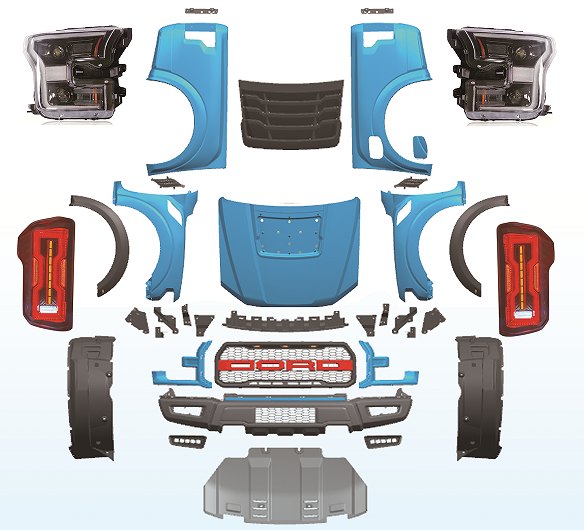
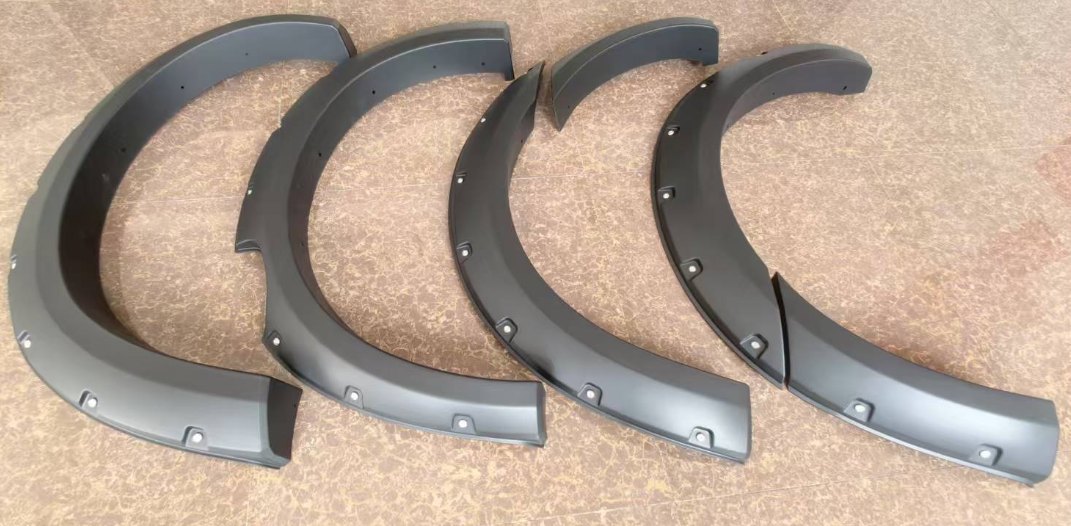
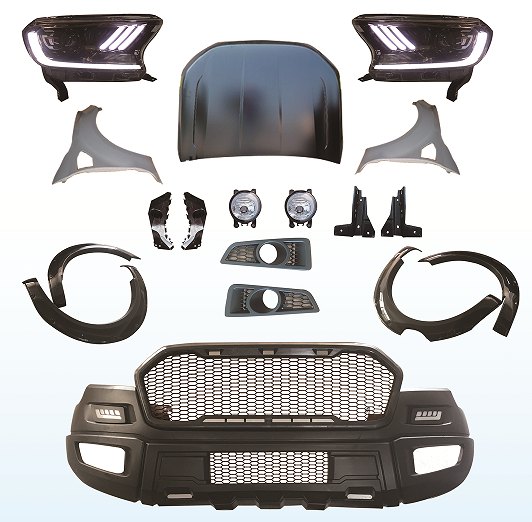
In the pickup aftermarket, a body kit changes selected exterior components: bumpers, grilles, fender flares, fenders and similar bolt-on panels that refresh a truck while keeping its original identity. A conversion kit goes further: it re-fronts an older truck in the style of a newer generation, swapping the visible exterior system so a previous-generation pickup takes on the face of the current one.
One clarification for buyers sourcing internationally: in some markets "conversion kit" refers to structural vehicle conversions such as car-to-truck rebuilds. That is not what this category means at Only For Parts. Here, conversion kits are exterior style conversions — panels and fascias, not chassis or structural work. Knowing which meaning your search results are using will save you a lot of misquoted lead times and mismatched expectations before the first order is even placed.
The Customer Logic Behind Each Line
The two lines map to two different trucks on your market's roads.
Body kits serve the newer installed base. Owners of current-generation trucks want their vehicle to look sharper than the base trim it left the factory as. They buy bumpers, grilles and flare packages that fit their exact year range, and because every model year brings new registrations, the demand refreshes itself — for wholesalers, body kits behave as a repeat-purchase category rather than a one-time sale. Our guide to choosing Ford Ranger body kits covers that line in detail.
Conversion kits serve the aging installed base. In many export markets the most common pickups on the road are one or two generations old, and their owners want a modern look without trading in. Conversion kits answer exactly that: a T6-generation Ranger refreshed with Raptor-style panels, or a 2012–2021 Ranger upgraded to the latest F-150 look. For the retailer, every converted truck also becomes a follow-on buyer of grilles, flares and accessories matched to the new front end — the kit sale pulls a second sale behind it.
A Practical Stocking Rule by Platform
Apply one question per platform: how old is the average truck on the road?
Markets where recent registrations dominate — Australia and much of Europe on the Ford Ranger tend to sit here — justify a deeper body kit line first, with conversion kits as a specialist addition for the earlier trucks still running around. Markets with a large older fleet — much of Southeast Asia, Africa and South America, where Hilux, D-MAX and earlier Rangers tend to stay in service for a decade or more — are where conversion kits earn their shelf space, because the installed base of older trucks is exactly their customer pool. Mixed markets need both, and that is the more common case in practice. Start with one body kit line and one conversion line per platform, watch which moves in your first season, then deepen the winner.
The same rule scales across product families: a conversion front end needs matching grilles and flares to look complete, so each conversion line you stock quietly pulls the rest of the catalog with it. That pull-through is worth more than the margin on the kit alone. Read it per platform rather than per market: the same country can hold both a growing new-generation fleet and a long tail of older trucks, and the two pools will pull different lines.
Fitment and Logistics: What to Check Before Ordering
Whichever line you buy, the discipline is the same. Confirm the year range in writing for every SKU — a conversion front end built for a 2012–2015 Ranger will not dress a 2019 truck, and clear generation labeling on listings and cartons is what prevents most disputes. Ask what the kit includes (panels only, or hardware and trims as well) and confirm finish quality the same way you would for any exterior line you put your name behind.
On logistics, consolidation matters more for kits because piece counts run higher than single panels. In-stock items can be mixed with other product lines in one shipment, so a trial order can combine conversion kits, body panels and accessories without splitting freight. Made-to-order items typically run 2–4 weeks, confirmed by product and quantity — worth building into your seasonal planning rather than discovering at peak.
Where to Start
If your market skews newer, begin with body kits and add conversions as older stock ages in. If it skews older, Ford Ranger conversion kits are the faster opener — they turn the trucks already on the road into demand. Either way, the next step is the same: contact us with your platform and market, or request the trade catalog, and we will confirm kit availability and fitment for the year ranges you actually sell for.